Sep 3, 2026
Why an Outboard Can Overheat Even When the Tell-Tale Stream Looks Normal
A strong tell-tale stream does not always mean your outboard cooling system is working correctly. Learn the hidden causes of overheating and what to check.
Many boat owners use one simple check to judge whether an outboard motor is cooling properly:
“If water is coming out of the tell-tale hole, the cooling system must be fine.”
Unfortunately, this is not always true.
A visible water stream only proves that some water is moving through part of the cooling system. It does not guarantee that enough cooling water is reaching every part of the engine.
This is one of the less obvious facts about outboard motor maintenance.
1. The Tell-Tale Is Only an Indicator
The small stream of water coming from the side of an outboard engine is commonly called the tell-tale, pilot water outlet, or “pee stream.”
Its main purpose is to show that water is being pumped into the cooling system.
However, the tell-tale outlet is not necessarily located at the hottest point of the engine.
That means an engine may still produce a strong stream while another cooling passage is partially blocked.
For example:
- Salt deposits may restrict water passages.
- Sand or mud may collect inside the cooling jacket.
- A thermostat may fail to open correctly.
- Corrosion may reduce water flow around the cylinder head.
In these situations, the tell-tale may look normal while engine temperature continues to rise.
2. A Worn Impeller Can Still Pump Water
Another common misunderstanding is that an impeller either works or fails completely.
In reality, an aging water pump impeller may continue pumping water at idle but fail to provide enough flow at higher engine speeds.
Impeller blades gradually become:
- Hard
- Cracked
- Deformed
- Permanently bent
At low RPM, the water stream may still appear normal.
But when the engine is running under load, the cooling system may not receive sufficient water.
This is why periodic impeller inspection and replacement are important even when the tell-tale appears healthy.
3. Thermostat Problems Are Often Overlooked
Most modern outboards use a thermostat to control engine operating temperature.
When the engine is cold, the thermostat restricts coolant flow so the engine can warm up properly.
As temperature rises, the thermostat opens and allows more cooling water to circulate.
If the thermostat becomes stuck partially closed because of:
- Salt
- Scale
- Corrosion
- Debris
the engine may overheat even though water is still coming from the tell-tale.
A thermostat is relatively small, but it can have a major effect on cooling performance.
4. Cooling Passages Can Become Partially Blocked
Outboards used in saltwater are especially vulnerable to mineral and salt buildup.
Small cooling passages around the cylinder block and cylinder head can gradually become narrower.
The problem may develop slowly.
Typical signs include:
- Higher operating temperature
- Overheat alarms at high RPM
- Normal temperature at idle
- Uneven cylinder-head temperature
- Strong tell-tale stream despite overheating
Freshwater flushing after saltwater use can help reduce deposits, but older engines may still require internal cooling-passage inspection.
5. The Water Intake Can Cause Problems at Speed
Cooling water enters the lower unit through intake openings near the gearcase.
At idle, the water pump may receive enough water.
At higher speeds, however, damaged or obstructed intake areas can affect water supply.
Possible causes include:
- Marine growth
- Plastic bags
- Mud
- Weeds
- Damaged intake screens
- Incorrect engine mounting height
An engine mounted too high may occasionally lose water pressure when the boat is running fast or turning sharply.
This can cause overheating even though everything appears normal when the engine is tested at idle.
6. Water Pressure Matters More Than Appearance
A strong-looking tell-tale does not always mean the cooling system has sufficient water pressure.
Professional technicians may use a water-pressure gauge to evaluate cooling performance.
The gauge can reveal problems that are difficult to identify simply by looking at the tell-tale stream.
This is particularly useful for:
- High-horsepower outboards
- Performance boats
- Engines mounted high on the transom
- Engines that overheat only at high RPM
What Should You Check If an Outboard Overheats?
If your engine produces a normal tell-tale stream but still overheats, check the cooling system systematically.
Important areas include:
Water Pump Impeller
Inspect for cracked, hardened or deformed blades.
Water Pump Housing and Plate
Excessive wear can reduce pump efficiency.
Thermostat
Check whether it opens at the correct temperature.
Cooling Passages
Look for salt, corrosion, sand or debris.
Water Intake
Make sure the intake openings are clean and unobstructed.
Engine Installation Height
Confirm the lower unit receives stable water flow when the boat is running.
A Small Cooling Part Can Protect an Expensive Engine
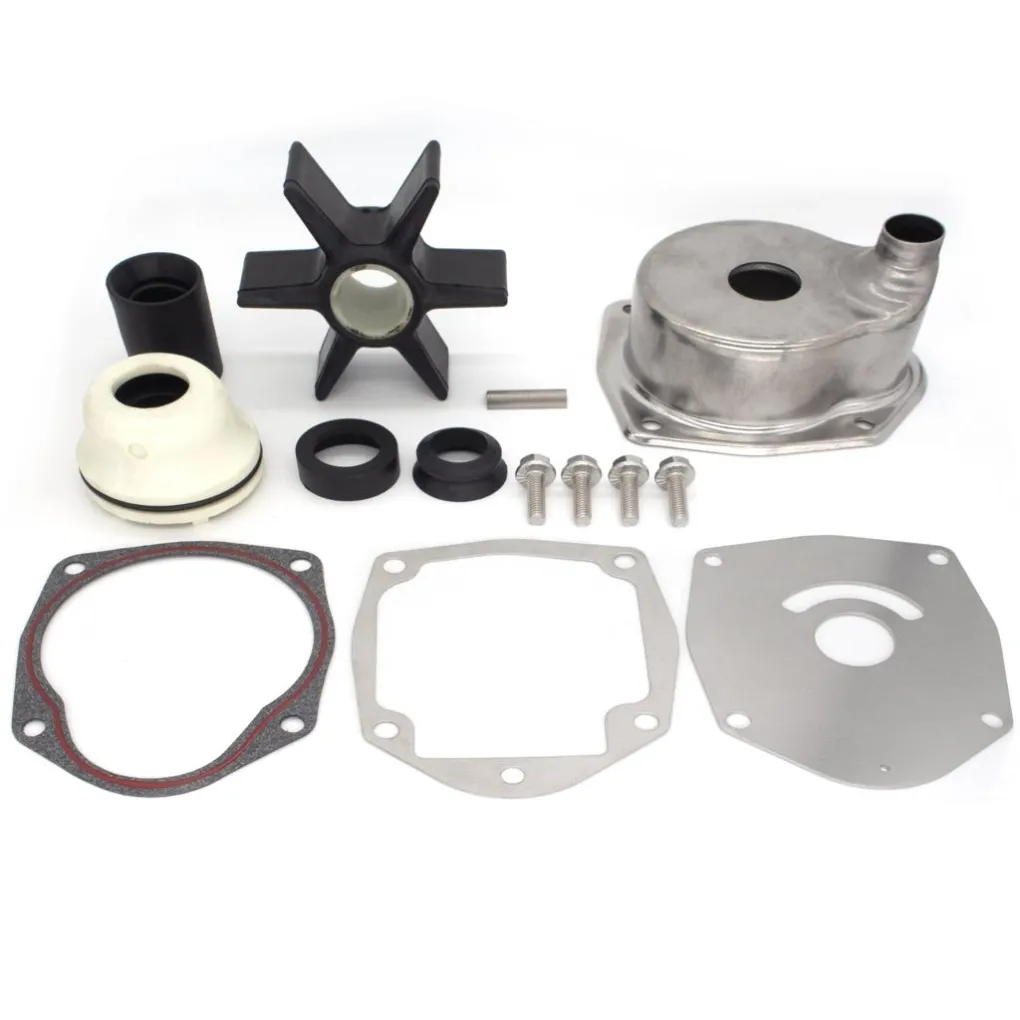
The cooling system contains relatively inexpensive components such as impellers, seals, gaskets and thermostats.
But failure of one small component can lead to serious engine damage, including:
- Cylinder-head distortion
- Piston damage
- Scoring
- Head-gasket failure
- Complete engine seizure
Preventive maintenance is usually far less expensive than repairing an overheated outboard.
Final Thought
The tell-tale stream is useful, but it should never be treated as a complete cooling-system diagnosis.
A good rule to remember is:
Water coming out does not always mean enough water is circulating through the entire engine.
Regular inspection of the impeller, thermostat, water passages and intake system can help prevent unexpected overheating and extend the service life of an outboard motor.